MRIS now requires that a listing agent disclose private and harmful information (to other agents) about a home that is Under Contract (as in NOT closed yet). That info? The buyer agent’s name.
Throughout this blog you will see examples of how Frankly agents advocate for and with their client, like no other firm does. What you might not see is some back end efforts that we fight for to help out our clients.
MRIS has a policy that I have been fighting for 6 months. I maintain that their policy is a direct violation of our fiduciary duty (blog post JUST on that!) to our client. Previously a listing agent would disclose who the buyer agent was AFTER a deal closes. No big deal. Agent use it to track stats, etc. But now MRIS requires listing agents enter buyer agent info (only visible by other agents) BEFORE the deal closes! No big deal? Yeah right!
That info can be used in a manner that HURTS the seller. So why require it? MRIS said that some broker’s of the buyer agent wanted to know when their agents had a deal under contract, because sometimes they don’t turn in paperwork.
How has it been abused? Here are some examples from an agent forum:
– I got a call yesterday from an agent wanting me to disclose how i won the deal. She got my name from mris. We have been under contract 4 days. Inspection yesterday. She was competing offer and backup. Go figure. I told her nothing and wanted to know how she got my name. Said Mris. I was shocked. And angry they disclosed my info to a competing agent on an offer in progress. D.C.
– “Picture this scenario: Buyer A contracts Seller B’s home. Seller C’s agent calls up buyer A’s agent and says, we have a very similar home one street over for $10k cheaper. If you void your contract via HOA docs, we can cut a great deal. While not real classy, seller C’s agent didn’t break any laws, but rather acted in his client’s best interest. Fully agree with you Frank. MRIS needs to remove that asap.” B.W.
– “that [buyer] agent showed my listing but wrote on this one, maybe we can get that buyer back by offering a lower price”. It’s a privacy issue for me and I would be willing to bet, it is for many buyers agents… Anyone else want to join in righting this wrong? EMAIL MRIS! K.D.
– Buyer loves a home. They demand the buyer agent contact the buyer agent that is listed on a home under contract. That buyer then puts in an offer to buy the contract off of the current buyer. (Frank)
Proposed solution #1: My solution is EASY. Add a new code called 888888 and make the agent name “Will disclose at closing”. Poof! Easy as that. Takes 10 minutes. Instead we have this mess.
Proposed solution #2: Hide the buyer agent info until the software is fixed. The client is more important than the broker.
Love to get your comments. If you were selling a home, would you care if the buyer agent’s info was shared before closing? Write to MRIS if you think this is an important issue.
Will your agent fight for you? With respect to this issue, 30,000 agents in the DC area apparently are not.
Update:
MRIS is waiving the $300 in fines levied on us, and better training their staff to know the new rules.
MRIS has decided to modify their system to only show this information to the relevant buyer agent’s broker by mid-July. But WILL still publish 1,000s of buyer agents that are under contract now. They could simply turn off this data display, but they feel it is more important that the broker’s get alerts about their agents, then the seller’s private information being disclosed.
Frank LLosa
Principal Broker Frankly Real Estate Inc
SERIES: Does your rebate agent do this?
We know buyers have options, and our goal is to create value. Net you more, save you from buying the wrong place (ripe for a blog post), and find places you wouldn’t get elsewhere (off-MLS, coming soon, and Under Contract homes). And as I have said before, if you can find a rebate agent who can do that… use them (articles on Rebating).
I LOVE UNDER CONTRACT HOMES.
I want to consolidate and update previous posts on Under Contract homes (here and here). I think Under Contract homes are the biggest missed opportunity in real estate. Just the other day a listing agent told me he listed all homes as “Contract” (will explain differences later). This incorrect category will remove his listing from ALL websites! And sure he said he would be open to a back up offer if somebody found it, ha, good marketing strategy “If somebody finds [the hidden home]”. Contrast that to every Frankly home changing the comments to read BACK UP OFFERS ENCOURAGED. Hum, still wonder what the differences are between Frankly and large companies, or even rebaters? Then keep reading.
CONTRACT TYPES AND DEFINITIONS.
There are 3 types of Contracts on MRIS’s MLS system (the MLS equivalent of a drug lord, the data feed for most all sites).
1) Contract with Kickout. 10% of UC homes, 80% chance to win.
This status is rare, but these are the EASIEST to win. Why? The “kickout” is a term in the contract that lets the buyer walk if the buyer can’t sell their own house. If a new buyer writes an offer, it CAN “kick out” the first offer. The first offer then has about 3 days to decide if they can risk removing that contingency. Most can’t. Then you win. This status for me, is almost the same as “Active”. There are many strategies on how to offer on these. Sometimes a $ amount over the current offer, or $10k BELOW the current offer (you can win on terms or money, see video preview here).
You can search for Under Contract homes with a Kickout on Frankly.com, by adding the word Kickout.
2) Contract with No Kickout. 40% of UC homes, 20-30% chance to win.
Why not try and offer on one? Well many/most buyers agents won’t, and listing agents won’t try and get one. Too much of a pain and too time consuming for them. Again, will your rebate agent do this? Maybe if you ask, but is that the mentality you want in a partner? Only if you ask them about winning your dream home?… what else do you need to “ask” for? It should come standard (insert trademarked tagline, Excellence Comes Standard).
Megan, a Frankly broker, won her house that way. Do what the agents do!
Contracts fall out all the time. Once we had 3 contracts drop out, it just happens on it’s own. But also a well written back up can INCENTIVIZE a seller try make your offer the primary. I won’t go into detail (I do a little too much already in the video)
3) “CONTRACT” 50% of UC homes, 15-25% chance to win.
This status removes the home from most/all websites. Why a listing agent would do that is beyond me. It is supposed to be a status that is moved from one of the other two statuses when ALL CONTINGENCIES have past and the deal is “almost closed”. Do you think most agents want to change the status 1 extra time? Many who use this are just lazy and it HURTS YOUR SELLER!. You can still offer on these, but your chances might be a little lower, but again, they might not be. Your agent can find them on the back end MRIS lookup and if you see an Active home suddenly disappear, that might be why (that or it was withdrawn, expired, ie the listing agent was fired).
FINAL ADVICE
Sellers: Make sure your agent keeps working well beyond putting the home under contract. Or better yet, just make sure you have a Frankly agent. This can NET you significantly more, but it takes much more effort on the agent’s part. And many have already moved onto the next listing.
Buyers: Why not try? Give it a shot. If you are a back up offer, you can still void it if you find something else (unless it is made into the primary offer).
These extra things that Frankly agents do will make a world of difference. I get it that most think buying a home is like buying a pack of Charmin at Target, but there is so much more to helping get you in the right home. And like always, reach out MONTHS before you think you might be interested. Don’t settle for a Popcorn agent.
Frank LLosa
Principal Broker Owner Frankly.com Realtors.
(my email is in the video, can post it for spam reasons)
Ps. Are you a rare like-minded full time experienced agent? Want to join Frankly? We need more agents in Baltimore, DC, and PG County.
Update 9/2015 to this 2007 post. Frankly.com, the unique home search site will now be exclusively for the benefit of our clients after a 10 day no obligation trial, that means signing one of these contracts. Read below to better understand it, and watch this VIDEO on why.
What is an “Exclusive Buyer Agency Agreement”? This is a contract that a buyer is oftentimes asked to sign by a buyer agent Realtor. In part it commits the buyer to use this one agent exclusively for several months.
The MLS. It’s harmless… or is it? There are lots of things to legitimately be afraid of. Let’s talk about adding, or seeing, “as-is” on a listing. Should you be afraid? Some people are.
Afraid of “AS-IS” Home for Sale?
When buyers see the words “as is” it sometimes freaks them out. They think that there could be major issues with the property and that they won’t have a right to inspect it. Well that’s not entirely true. Even though it says “as is,” you can request in your offer to do a home inspection and leave in the right to opt out if substantial repairs are needed (yes, the seller might say “no inspections” and that IS scary! But sometimes still manageable). Although the sellers may not be willing to fix any issues, they could still do a seller credit or even reduce the price by $5K or $10K. And since “As Is” scares away so many buyers, it will potentially have less competition when making an offer, and thus a lower purchase price.
Scary or Not Scary?
I actually love helping buyers with “as is” properties because there is usually less competition. Estate sales are great as well and most of the time they are listed “as is.” But consider it differently if you are selling. In this case I don’t think sellers should ever us “as is.” In the state of Virginia almost all homes for sale are “as is” already, so why even put that into the MLS remarks? If you are making a purchase more buyers will be scared away because it makes them think that there could be something substantially wrong with the home. Go figure.
Buying As Is Tips
Everything is as is. Virginia is existential like that.
You can still ask for a home inspection on “as is,” and you can still have the right to opt out. Some sellers say they don’t have cash so they won’t fix it-but they can do a 5K, 10K price reduction
Its not something to scared of, estates do it as well (aka “20 heirs waiting for their checks, we’re not going to have them pay to fix it but maybe drop price a little”).
Go after homes with as is, because it tends to scare off other buyers which is good for you
Selling As Is Tips
In VA almost all homes are “as is” anyways, so why put that in your advertising?
A buyer could view an “as-is” notation as nickel and diming, or “hey, were not going to fix anything.” It makes the buyer think that there are major issues and that they wont have a right to inspect it.
Like selling a Rolex at a flee market, fees might be lower but what it counts is the net takeaway. I find reality hits hard for FSBO’s that think they don’t always need a Realtor. Here’s a brief trip through my experience after helping only 300 FSBOs. Hint: Ur Doin’ It Wrong.
In most industrues, you understand “the competition.” Why should Real Estate be any different? An agent’s track record explains why you should bring your “A” game against a team you’ve never seen play before.
I would like to introduce our new logo! Yep, still the same signature purple, but with a sharper look. And yes I purposefully (is that a word) avoided the cliche roof, house or key images in the logo.
To celebrate I have 17 free Angie’s List 1 Year memberships ($10 value) left to give out. Start by making sure you are a Facebook FAN of FranklyRealty at www.facebook.com/FranklyMLS. The first dibs go to past clients, if you already have an account I can add a year. Then readers/site users that are local, non-Realtors and that follow and enjoy the Blog or are fans and avid users of FranklyMLS.
I also have 15, $5 Starbucks gift cards to give out. Same criteria as above, just reach out directly (even if you have another agent, but love the blog or FranklyMLS). Use the Contact Us” link on the right.
As for the July 2014 market? For newly listed homes we did get a couple offers for a few homes, but the word on the street is that homes over 14 days, it is dead out there. We call it crickets. Is it the typical summer slowdown or something more? I don’t know. But buyers, you have a little more power now, while it might be inconvenient for you, it is likely inconvenient for others too, and that can be in your favor.
And as I told somebody today on the phone, stop with the “Well I wasn’t sure if I was going to buy so I didn’t call because I didn’t want to bother you, and then we accidentally bought a house.” I hear it all the time. Don’t be shy. When in doubt, reach out. Even if it is 6 months before you are ready to buy and even if you aren’t sure. Just say hi, so if that perfect place hits, we’ve gotten the formalities out of the way. Oh and don’t find any inventory? We can find it for you (non-MLS), ask how.
Frank LLosa, Esq. Broker
Frankly Realtors MD, DC, VA
Bottom line, Deadlines… I don’t like them, they can hurt you, but sometimes they are necessary.
If you have read my other posts on bidding wars and putting in offers to buy Virginia, MD or DC homes for sale, you know that I obsess with the art of negotiations. How you put in an offer matters. Want me to prove it? I can send you a 20 minute, non-public raw video I made of an analysis I did for a 7 contract bidding war. We were on the listing side. I compare and ridicule the 7 offers. You can then see how to make your contract stand out and see me yell (at the screen) for not-so-sharply written contracts and how that hurts the client. This shows you what not to do. It shows you a spreadsheet analysis and how to make your offer the best in each column… except maybe the price. I prefer my clients win with the lowest offer or at least not the highest offer. (this private link is only for people not currently working with an agent)
Back to deadlines. I don’t like them. Why? Experience. Seems logical to put in an offer and put a deadline of X days or X hours. Logic won’t win you a home (more…)
Update 7/10/2013 Just got PreMLS.com and have launched in 6 cities in the US.
The legend has it that once upon a time there was one book per real estate office that had each real estate home for sale. Likely updated MONTHLY! Then the data moved to computers, but only for agents to see, and then the data went online where the agent OR the buyer could check it WEEKLY for new homes.
Then consumers demanded faster, so Realtors got fancy and delivered DAILY email alerts for new listings. That was earth shaking. But that wasn’t good enough. Sites like FranklyMLS.com started offering nearly INSTANT ALERTS for new listings. Beating out other buyers.
But now the time has come. To be even faster. Even more Instant-er!
Are we talking mere seconds? No. How about going Back to the Future and knowing what will be on the MLS BEFORE IT HAPPENS!! And in a large quantity! Possibly 10-20% of the marketplace one day.
How is that possible?
Consumers demanded it, so Frankly made it, and the Agent community embraced it.
More and more I am seeing the technique of purposefully underpricing a listing in order to create an artificial bidding war. It is a very tempting pitch from your listing agent, but don’t fall for it! They may want you to underprice in order to sell your home quickly and to move on. Their goal might not be to net you the highest amount. And it doesn’t work, in my opinion.
Example (ass described in the video)
Listing 1, our listing. $429,000, sold for $432,600 or 101% of list.
Listing 2, not ours. $399,000, sold for $433,000 or 108% of list
One might initially think listing 2 did better. However, #2 was listed a month after #1 went Under Contract fast (so they should know that it went near full price, and newer listings in an up market tend to ask for about $2,500 more). Listing #2 was nearly identical, but two floors higher plus a fireplace. Two floors is about $6,000 in value, a fireplace, maybe $2k. Yet they only got $400 more on a place worth $8,000 more. The result of underpricing to create a bidding war… a loss of $7,600-$10,000 in value. Oops!
Why doesn’t it work? Bidding War Exhaustion ™,(more…)
Many Realtor blog posts will say “BUY NOW!!”, or “Interest rates can’t get lower!” Over here we first say DON’T BUY, ASK WHY (since 2006 when I had hair).Which means, let’s first figure out if buying is right for you, and THEN move forward. No “don’t want money on rent” B.S. Heck Rent is CHEAPER!!
Did you know the moment you buy a home, you lose 8% equity! For those of you that put down 10%, that is an 80% loss in your investment overnight, or with a stroke of a pen (actually hundreds of strokes, those damn stacks of closing paper).
Everyone has heard about the “Drive a new car off the lot” effect. Well this is the same. (on the flip side, most car values keep going downhill.)
I’m not trying to scare you, but just put into perspective how real and huge an investment this is. You better get it right, and have the right representation (subtle plug?? Contact us 3-6 months before you think you are ready! This ain’t a checkout in Target.). Did your mom’s friend’s agent warn you about this? Or that “great deal” agent? Probably not.
One of my first qualifying questions is “HOW LONG DO YOU PLAN ON LIVING IN (more…)
Now for Listing Advice. I previously spoke about Bidding Wars for Homes for Sale in Maryland, DC and VA in my post Bidding Wars. Secret to Winning A Home in the DC Area (of which about 20 people emailed me directly for my #1 secret tip).
But this video is from the perspective of the SELLER who might find themselves selling in this Hot Market.
The first instinct is to think one’s house is “easy” to sell. It actually becomes kinda a joke because we hear it so frequently. Everyone thinks their home will be an easy one. Yet it never is.
Especially now that there are bidding wars and it is a seller’s market (meaning sellers have more power now). Heck, why not just throw it up on the MLS (see Throw Up Listings, from 2007, but still applies) since it “sells itself.”
I wish it was that easy. Or maybe I don’t because then I might be out of a job.
Our goal is to get you the highest NET possible. That includes being aware of what you are paying in commission and your alternative options (but heck why go anywhere else). We respect your (more…)
3 FranklyMLS tips and a major update that things are changingand how one user thought we were too busy for them!!
First, Just The Tips!
Tip 1) Add a Favorite
When you click on the in either the spreadsheet mode of the single page featuring a property, you will get hyper updated alerts on changes to this home. Including any price drop, remarks change, more photos, added 3rd party comment, agent sneezing, under contract or even the final SOLD price. An awesome tool that so few utilize.The default is daily email change alerts, but in this market you might want to opt for the alerts as fast as 15 minutes after the change is made (ask us how).
Tip 2) Save a Search!
Again, seems obvious (at least to me) but 80% of the users don’t have a saved search set up properly. Assuming you are logged in, after you conduct a search, press the Save Current Search button in the middle of the screen. This will send you all new listings, price drops and sold prices for everything in your search area and criteria. NO need to obsess and check the site several times a day. Sit back and relax. Also the emails are VERY cell phone friendly with a direct link to the mobile version of the listing.
Ok. You hear about all of these bidding wars and low inventory. Yet your home still sits after 90 or 120 days. Is it the agent’s poor marketing? Is it the lack of follow up?
Did your agent agree to your “hurry up” and get the listing up and thus result in a “Throw Up Listing” that takes longer to sell? (we recently refused/lost a listing because we refused to put up garbage that would hurt the client)
Or did they win you by telling you your house will be on 600 websites! (as if that isn’t the default nowadays, but sounds great!!)
Or you just never hit this blog to get non-boilerplate Listing Advice.
Or maybe it is partly your fault for the home being overpriced? You demanded a price that in your gut felt right? Or they gave you no guidance and said yes to every command. (President’s shouldn’t have “yes men” around them, and you shouldn’t hire a “yes man” agent, hum that sounds like a solo blog post, make sure you subscribe today!)
Perhaps, but has the agent done their part and shown you EACH home that has gone under contract or sold nearby since the day you listed? And have they contacted EACH buyers agent and asked them “I see you bought, xyz, would you mind telling me why you passed on our house?”
My guess, very unlikely. Why? Because that stuff takes time.
So you want to fire them once the listing agreement expires.
A “Back-Up Offer” is an offer that is submitted when a home is already Under Contract (as seen on FranklyMLS with the strikeout line) with another buyer. (sidenote: this post kinda conflicts with my “this home is not available” post on the FranklyMLS blog, feel free to call me out on it).
If the seller signs it, it becomes the “Back-Up Contract.”
Does it happen often?
Sure. My guess is 10-20% of deals. Especially in the first week of being UC. I once had a listing with 4 contracts that fell out!
How does one put in a back up offer?
The second potential buyer will submit, preferably with their buyer’s agent (which should be an exclusive agent), a regular 20+ official contract with an addendum that outlines the details of the “back up offer.” This offer becomes ratified when it is signed by both parties. Then, in the event that the first contract does not perform, then the back-up offer immediately becomes the “primary contract”.
Disclaimer: Do not believe the post title, it is a hyper exaggeration. Your results may come in under $1,000,000 in savings.
But why save Trillions, when you can save Billions?
Ok maybe a bit much, but quote is the cliff notes:“FranklyRealty.com got me more money than I ever would have imagined.” Why exaggerate when you got that?
With all those compelling options buyers and sellers have today, I think I need to go into more detail explaining exactly how a great agent can help you NET more and more importantly win a home when inventory is tight.
This client is the perfect candidate to explain exactly what we do. A year ago his approach to real estate was typical “I’m smart” (oftentimes a lawyer or professional) and “I will go For Sale By Owner, FSBO, tosave money selling and I’ll be really smart and I will use a rebater tosave on buying.”
But then he got educated. Read almost every blog post in this Blog and became a convert (ie. even smarter than smart). He took the leap and used Frankly Real Estate and is here to share his experience with others considering FSBO, Rebating or your mom’s friendly Realtor (which is an upcoming post, so make sure to subscribe!). Don’t get me wrong, I am not knocking going solo via FSBO (see best post ever on “saving” $20,000 via FSBO) or Rebaters.
Heck, my long standing moto has been “I used to rebate, but then I got good”.
P.S. What do you all think about an informal (rsvp required) home buying seminar for repeat or 1st time home buyers in the $500-$1.3M range (too many seminars out there for the $100-$300k range buyer). I thought the concept was cheesy, but was like “actually it could be pretty cool.” You in?
p.s.s. Did you see my tweet on how my HGTV stars/clients are selling their Arlington home 3 years later? Here is the listing: AR7949281 it looks amazing.
This post may self destruct, for it tells too much! Yep, I might remove this post after my 1,000 subscribers get it in their inbox (are you signed up, do so in the upper right). Hopefully the competition doesn’t get to it. (I have already had one request to take it down)
So you have probably read newspaper articles about bidding wars on homes for sale in the Maryland, DC and Northern Virginia area. Especially houses in Arlington Virginia.
The inventory is tight and people are off to the races. Sometimes 5 offers, sometimes more.
This site is mostly about buying and selling real estate in Virginia, MD and DC, but most don’t realize that I also like to take an active role with the lending process. Kinda spot checking to make sure things look right and bringing up “oh, I hadn’t thought of that, type stuff.” Those little things can make a $15,000 difference. Does your agent do that?? (again, why you shouldn’t hire a buyer or listing agent based on bullet points, but instead based on a brain)
Anyhow, today I wanted to discuss something that came up with a blog reader via my online chat (see right column). He was heading down the path of a 10% mortgage, even though he had more cash. He wanted to be “conservative” and have a cushion.

 MRIS now requires that a listing agent disclose private and harmful information (to other agents) about a home that is Under Contract (as in NOT closed yet). That info? The buyer agent’s name.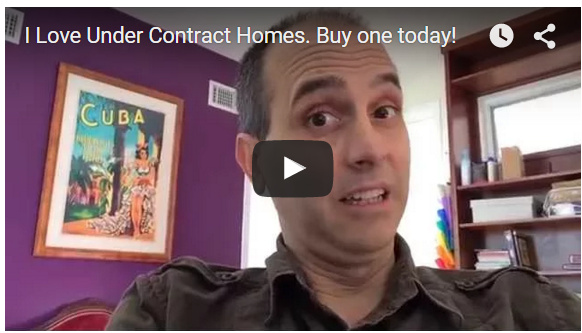
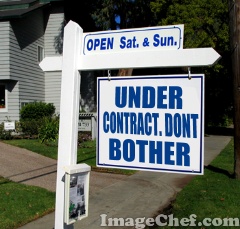






 As for the July 2014 market? For newly listed homes we did get a couple offers for a few homes, but the word on the street is that homes over 14 days, it is dead out there. We call it crickets. Is it the typical summer slowdown or something more? I don’t know. But buyers, you have a little more power now, while it might be inconvenient for you, it is likely inconvenient for others too, and that can be in your favor.
 Bottom line, Deadlines… I don’t like them, they can hurt you, but sometimes they are necessary.













 Ok. You hear about all of these bidding wars and low inventory. Yet your home still sits after 90 or 120 days. Is it the agent’s poor marketing? Is it the lack of follow up?
 What is a back up offer on a home for sale?
 “FranklyRealty.com got me more money than I ever would have imagined.” Why exaggerate when you got that?
 Just got my new business cards. I was bored of the usual, and everyone likes a cookie. They are Vegan too!
 Bidding Wars on Real Estate? Yep!